Zdjęcie: iMin Technology (Pexels)
When someone's looking for a place to eat, they almost always start on their phone. They type the restaurant's name into Google, click the first link, and have a few seconds to decide whether to stay on the site or go back to search results. If the restaurant website loads slowly, the menu is a PDF scan, and there's no ordering button at all — the customer simply leaves. This isn't theory, it's the daily reality for hundreds of restaurants in Poland.
A restaurant's own website is no longer a "nice-to-have" that you set up once and forget. It's now the main channel through which customers check the menu, place takeout orders, book a table, and decide if a restaurant is even "worth going to". Facebook and Instagram matter, but they won't replace a website — algorithms limit your reach, and a menu link always goes to one place.
What customers really look for on a restaurant website
Analyzing user behavior at restaurants using SkanujMenu®, a clear pattern emerges. A customer lands on your site and within a few seconds wants the answer to three questions:
-
What can I eat here and how much does it cost?
-
Can I order it now, online?
-
Is there a free table tonight?
If your website doesn't answer these questions right away, on the first screen, they'll look elsewhere — usually at a competitor who has it figured out better. That's why your menu should be readable on mobile, not as an image or PDF, and QR menus should lead directly to your current menu, not just the homepage.
A menu that updates itself
One of the most common complaints from customers is the gap between what they see on your website and what's actually available in the kitchen. Seasonal dishes, sold-out items, price changes — if you have to update all of this manually in multiple places, eventually someone will forget. Automatic menu updates solve this problem — you can set different menus for lunch and dinner, and the system automatically switches which items are visible at the right times, without you having to log in multiple times a day.
It's also worth thinking about customers with allergies or food intolerances. Clear allergen labeling right next to each dish, thanks to dish labels and allergens, isn't just convenient — it's often what allows someone to decide to order at all.
Online ordering without redirecting to three different apps
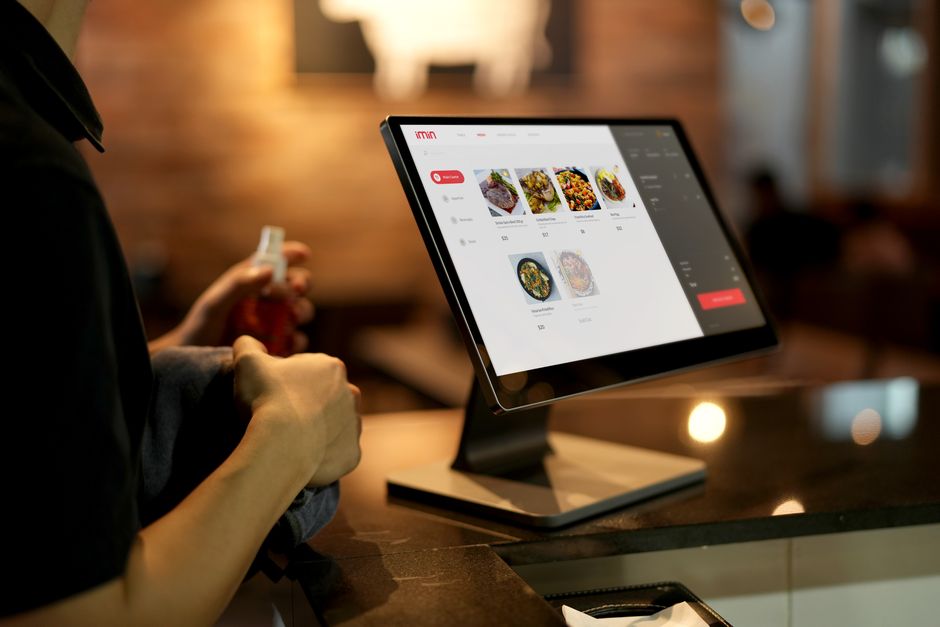
Customers are used to ordering online, but they're increasingly fed up with jumping between external apps where commission fees eat into your margins and customer contact is anonymous. A restaurant website with a built-in real-time online ordering system lets you accept orders directly, without middlemen — orders go straight to your kitchen system, and customers see fulfillment status live.
There's a financial side to this too. A restaurant that takes 40 orders a day through an aggregator charging 25-30% commission is giving away roughly a quarter of that revenue. With your own ordering system, that money stays in your pocket.
Payment options matter just as much — the fewer clicks between "I want to order" and "I paid", the fewer abandoned carts you'll have. Online payment and cash on delivery give customers choice and give you certainty that an order is actually confirmed, not just "submitted".
Not every restaurant delivers to the same places at the same times. If your kitchen has limited capacity during rush hours or delivery to farther neighborhoods takes longer, it's good to communicate that upfront — delivery zones and delivery time let you set different conditions for different areas, so customers know what they're getting before they place an order.
Table reservations without phone calls during peak hours
On a Friday night, the restaurant phone rings constantly, and the waiter who should be taking care of customers is answering questions about table availability. Online reservations on your website take the pressure off staff and give customers what they expect — the ability to book a table in two minutes, without waiting for a call.
Small features that make a difference in daily operations
A few solutions that rarely take center stage in restaurant website discussions but in practice save a lot of headaches:
Order blocking — when your kitchen is overwhelmed or you're closing earlier than usual, order blocking lets you turn off online ordering with one click, so you don't end up with customers paying for orders you won't be able to prepare in time.
Discount codes and promotions — campaigns like "10% off your first order" or loyalty discounts work better when they're built into your ordering system rather than handed out manually. Discount codes and promotions can be limited by time or specific dishes.
Google reviews after ordering — a satisfied customer rarely goes back on their own to leave a review, but if they get a link right after picking up their order, the chances of a positive review go up significantly. Google reviews after ordering automate that moment.
Statistics and reports — without data, it's hard to tell which dishes sell and which ones just take up space on your menu. Statistics and reports show you the facts, without having to manually count in Excel.
Team and employee permissions — when several people at your restaurant handle orders, it's worth controlling who can change the menu and who just accepts orders. Team and employee permissions let you divide those responsibilities.
How much does this actually cost
Many restaurant owners assume that a website with a full ordering and reservation system costs thousands of zloty and takes months of work with an agency. In reality, you can get it up and running much faster and cheaper if you use a ready-made platform instead of building everything from scratch. Details are on our pricing page — it's worth comparing this to the commissions you give to aggregators over a year.
How to get started
You don't have to overhaul your restaurant operations overnight. The simplest way is to see what a complete solution looks like in practice — all SkanujMenu® features can be tested without any commitment. If you just want to see how it works with your menu, you can create a free account and set up your restaurant website in one afternoon. And when questions come up about specific configuration for your restaurant, contact with the SkanujMenu® team is faster than searching for answers on your own in the documentation.
A well-functioning restaurant website doesn't need to be flashy — it needs to be fast, clear, and guide customers step by step from "what's good here" to "ordered" or "reserved". Everything else is extra.
Wypróbuj SkanujMenu® w swojej restauracji
Bezpłatny miesiąc, bez karty i bez zobowiązań.