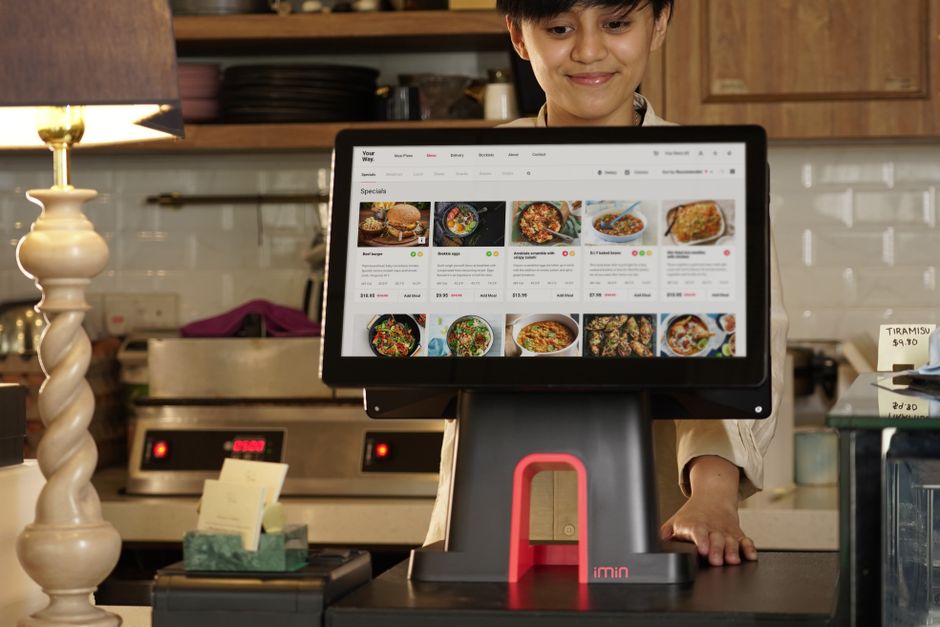
Zdjęcie: iMin Technology (Pexels)
A small pizzeria owner in Krakow once told me that for six months, all employees logged into the system using a single admin account. Convenient, quick, without thinking about who has what access. Until it turned out that someone canceled three paid orders 'by mistake', and no one could figure out who exactly did it. It's a fairly typical story in the food service industry — the question of employee permissions in a POS system seems unimportant until a problem appears that can't be undone.
Why one account for everyone is a bad idea
In small establishments, the temptation is natural — fewer accounts, fewer passwords to remember, faster service. The problem is that a system without role division is a system without accountability. If everyone can change a dish price, grant a discount, or issue a corrective invoice, sooner or later someone will do it wrongly — sometimes by mistake, sometimes on purpose.
Well-configured team and employee permissions is not bureaucracy for bureaucracy's sake. It's real protection against financial losses and operational chaos. In a restaurant employing 8-10 people per shift, where staff rotation can be significant, a clear division of roles saves the owner a lot of headaches.
What roles are most commonly distinguished in a POS system
Most systems allow you to build a hierarchy tailored to your restaurant's structure. In practice, division into several levels works well:
Waiter / floor staff — access to taking orders, assigning them to tables, basic payment processing. Without the ability to cancel paid orders, without insight into other shifts' sales reports, without changing menu prices.
Cook / kitchen — only kitchen view with a list of orders to prepare, marking statuses (received, in progress, ready). Zero access to sales or financial information — the cook simply doesn't need this data to work.
Shift manager — broader access: can cancel an order, grant a discount within a set limit, block new order intake during peak hours via order blocking when the kitchen falls behind. Sees current shift statistics but has no access to account-wide settings.
Owner / administrator — full access: statistics and reports, menu management, payment configuration, discount code settings, managing employee accounts and their permissions.
Such division is not a rigid rule — in a small family restaurant, roles often overlap. The point is rather this principle: everyone has access to what they actually need for their work, and nothing more.
What well-configured permissions actually protect
Control over discounts and cancellations
A discount granted 'for a regular customer' or a canceled order are the most common places where money disappears in food service — not always intentionally, sometimes simply due to lack of procedure. When only the shift manager and owner can approve such an operation, it's easier to spot unusual patterns in reports.
Accountability assigned to a specific person
When each employee logs in with their own account, every operation in the system has its author. It's not about 'catching' people on mistakes, but about the ability to quickly clarify a situation — for example, when a customer complains about an order or when you need to check who served a particular table.
Security of financial data
Access to online payments and payment upon pickup or to full sales reports should be reserved for people managing the establishment. The fewer people with access to this data, the lower the risk of information leaks or unauthorized changes to payment settings.
Practical scenario: a restaurant with delivery and dine-in
Let's take the example of a restaurant that serves both in-house guests and online orders through its own restaurant website. In such a model, permission division becomes even more important because more variables come into play — delivery zones and preparation time, couriers, orders via QR menu at the table.
It makes sense to create a separate role for the person coordinating deliveries — with access to the list of active orders and courier statuses, but without the ability to interfere with menu or prices. The waiter serving the dining room doesn't need to see delivery orders, and the person taking calls from couriers doesn't need access to table reservations managed through online reservations.
When to review permissions again
Employee roles in the POS system are not a 'set it and forget it' setting. It's worth returning to this topic when:
-
the team composition changes — especially during shift manager rotations,
-
the restaurant launches a new feature, such as a loyalty program or automatic price list changes through automatic menu updates,
-
a new location opens in the chain and you need to decide whether managers see only their location's data or the entire network,
-
unusual patterns appear in reports — frequent cancellations, discounts granted outside peak hours, logins from unusual times.
Wypróbuj SkanujMenu® w swojej restauracji
Bezpłatny miesiąc, bez karty i bez zobowiązań.